

After a breakup, a divorce or the loss of a partner, the question "am I ready to date again?" can feel heavy. Friends may nudge you to get out there, family may worry, and you may not know what you want. The truth is that there is no schedule you have to follow. Only you can tell when you feel ready to date again, and it is perfectly fine to take as long as you need.
This guide offers gentle signs to look for, honest questions to ask yourself, and ways to take a first step slowly if you decide you want to. It is written with care, because endings and losses are painful, and healing is not a straight line.
There is no right timeline
You may have heard rules like "wait six months" or "half the length of the relationship". These make for neat advice, but they do not describe real people. Some people feel open to company within weeks, especially after a relationship that had already ended in their hearts. Others need years, especially after losing someone they loved deeply.
Instead of counting months, notice how you feel. Readiness is less about time passing and more about your own heart, mind and daily life settling enough to make space for someone new. Be wary of anyone, including yourself, who insists that you should be over it by now.
Signs you may be ready to date again
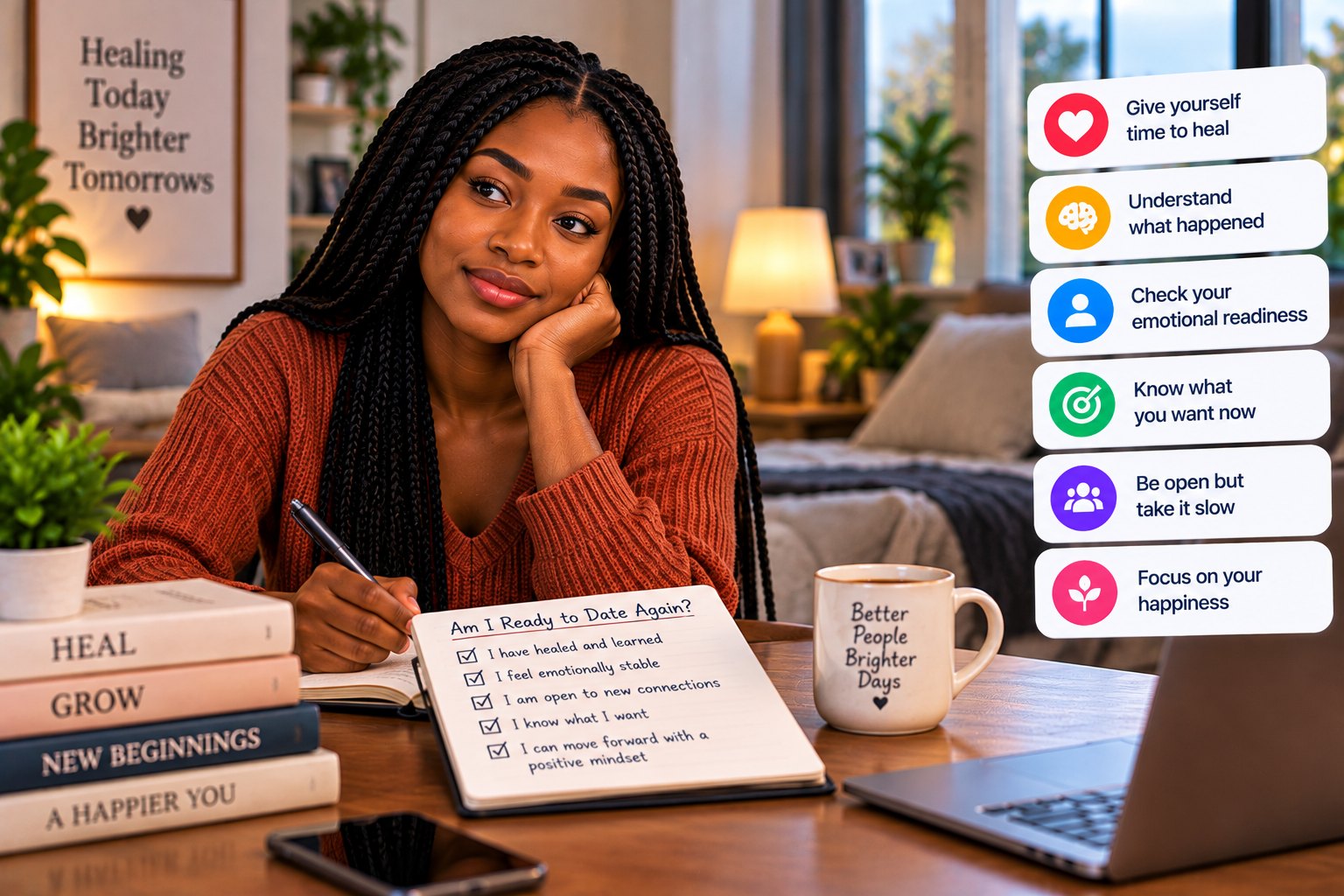
None of these need to be perfect, and you do not need to tick every one. Together they can give you a sense of where you are:
- You can think about the past without being flooded by anger, panic or tears most of the time.
- You are interested in meeting new people because you want company, not because you need rescuing.
- You enjoy your own life: friends, work, hobbies, faith, family and quiet evenings.
- You are not hoping that a new person will make your ex or your loss feel less real.
- You can speak about the past without constant blame, and you have some sense of what you learned.
- The idea of a coffee or a conversation feels more curious than frightening.
If most of these feel true, you may be ready to try. If very few do, that is also useful to know, and it simply means your heart is asking for more time.
Honest questions to ask yourself
Grab a notebook or find a quiet moment, and answer these as honestly as you can. Nobody else will read your answers.
- Why do I want to date right now? Is it company, loneliness, pressure from others or boredom?
- Do I still check on my ex, or hope they will come back?
- If a new person did not reply, would I feel disappointed or completely crushed?
- What do I want from the next relationship, and what did I need that I did not get before?
- Am I able to be patient with someone new, or am I comparing everyone to the past?
There are no wrong answers. If some of your answers worry you, be gentle with yourself. They simply show you where more healing might help before you begin.
When you are grieving a loss
If you have lost a husband, wife or partner to death, the path looks different. Grief does not follow a rulebook, and wanting companionship again does not betray the person you loved. Many people feel guilty or fear what family, church or community will think. These feelings are common and they deserve patience.
It can help to talk to someone who understands. A trained counsellor, a faith leader you trust or a close friend can listen without judgement and help you sort through the mix of emotions. If your sadness feels too heavy to carry on your own, please reach out to a professional or someone close to you. You do not have to work through it alone.
Signs you may need more time
Needing more time is not failure. Here are signs that a pause might be kind to yourself:
- You are looking for someone to fill a gap or to make an ex jealous.
- Thinking about the past still leaves you in tears or anger every day.
- You are not sleeping, eating or functioning well, and daily life feels very hard.
- You compare every new person to the one you lost.
- You feel pushed by friends or family, not drawn by your own wish.
If several of these ring true, consider speaking with a counsellor or someone you trust. Spending time on friends, rest, movement and things you love is never wasted. It makes you stronger and kinder to yourself, which is the best foundation for meeting someone else.
Dealing with comparison and old feelings
When you start meeting new people, old feelings may come back at odd moments. A smell, a song or a place can remind you of the past and bring a wave of sadness. This does not mean you are not ready. It usually means you are human. What matters is whether you can feel it, let it pass and still carry on.
Comparison is common too. You may catch yourself thinking, "She does not laugh like she did" or "He does not cook like him." Try to notice it gently without judging yourself. Everyone is different, and a new person will never replace the old one. If you want to enjoy a fresh connection, give it room to be its own thing. Writing down your thoughts, talking to a friend or visiting a counsellor can help you sort what belongs to the past and what belongs to today.
How to start slowly if you want to
You do not have to jump into dating. There are gentler first steps, and you can set the pace at every stage.
- Begin with friendship. Many people use a platform first to chat and meet new people without pressure.
- Set small goals, like one conversation a week or one coffee this month.
- Build your profile in your own time. Our guide on how to write a dating profile bio can help you say what you want honestly.
- Tell a friend what you are doing, so you have someone to talk to after each step.
- Allow yourself to stop. If a day feels like too much, close the app and rest.
You can also browse people near you without sending a message. Looking is a perfectly acceptable first step, and it lets you test how it feels without any obligation.
Being honest and kind with the people you meet
When you do start talking to someone, honesty helps. You do not need to share every detail, but it is fair to say that you are taking things slowly after a hard time. A kind person will respect that. Someone who rushes you or makes you feel guilty is showing you something worth noticing, and you can read more in our guide to green flags and red flags in early dating.
Protect your wellbeing as you go. Meet in public, tell a trusted person where you are and follow our safety tips. Be careful with anyone who moves very fast or asks for money. If a first date does not feel right, or if dating becomes more painful than hopeful, you are allowed to stop and try again later.
Healing and hope can live side by side. Readiness is not a finish line, it is a feeling that grows. Take your time, be gentle with yourself and remember that wanting connection again is a sign of a heart that is still open.