

Most conversations online are pleasant, but sometimes one goes wrong. A message makes you uncomfortable, someone will not take no for an answer, or a stranger begins to demand money or photos. Knowing how to block and report someone online means you can end the contact quickly, keep yourself safe and help others at the same time. This guide shows you when to act, what to save first and where to get help in Kenya.
You never need to wait for something terrible to happen. If a chat makes you uneasy, you are allowed to leave it. You do not owe anyone politeness at the cost of your own peace.
When to block someone
Blocking is a quiet, private way of closing the door. It stops the person from messaging you or seeing your profile. You can use it as soon as you feel the need, and there is no rule saying you must give a warning first.
Think about blocking when someone:
- Keeps messaging after you said you are not interested.
- Sends rude, insulting or threatening messages.
- Pressures you for photos, money, your address or your number.
- Becomes angry or guilt-tripping when you set a boundary.
- Sends messages that make you feel afraid or uncomfortable, even if you cannot say why.
- Appears to be using a fake identity.
Feeling uneasy is reason enough. You do not need to prove that someone has done something wrong in order to protect your own space.
How to block and report someone online: step by step
The exact buttons vary from app to app, but the process is similar almost everywhere. Here is a simple routine you can follow.
- Save evidence first. Take screenshots of the chat, the profile and any payment details before you do anything else.
- Do not reply or argue. A final angry message rarely helps and can encourage more contact.
- Open their profile or chat. Look for the menu, usually three dots or a flag icon.
- Choose block. This ends their access to you.
- Choose report. Pick the reason that fits best and add a few details, such as what they said and when.
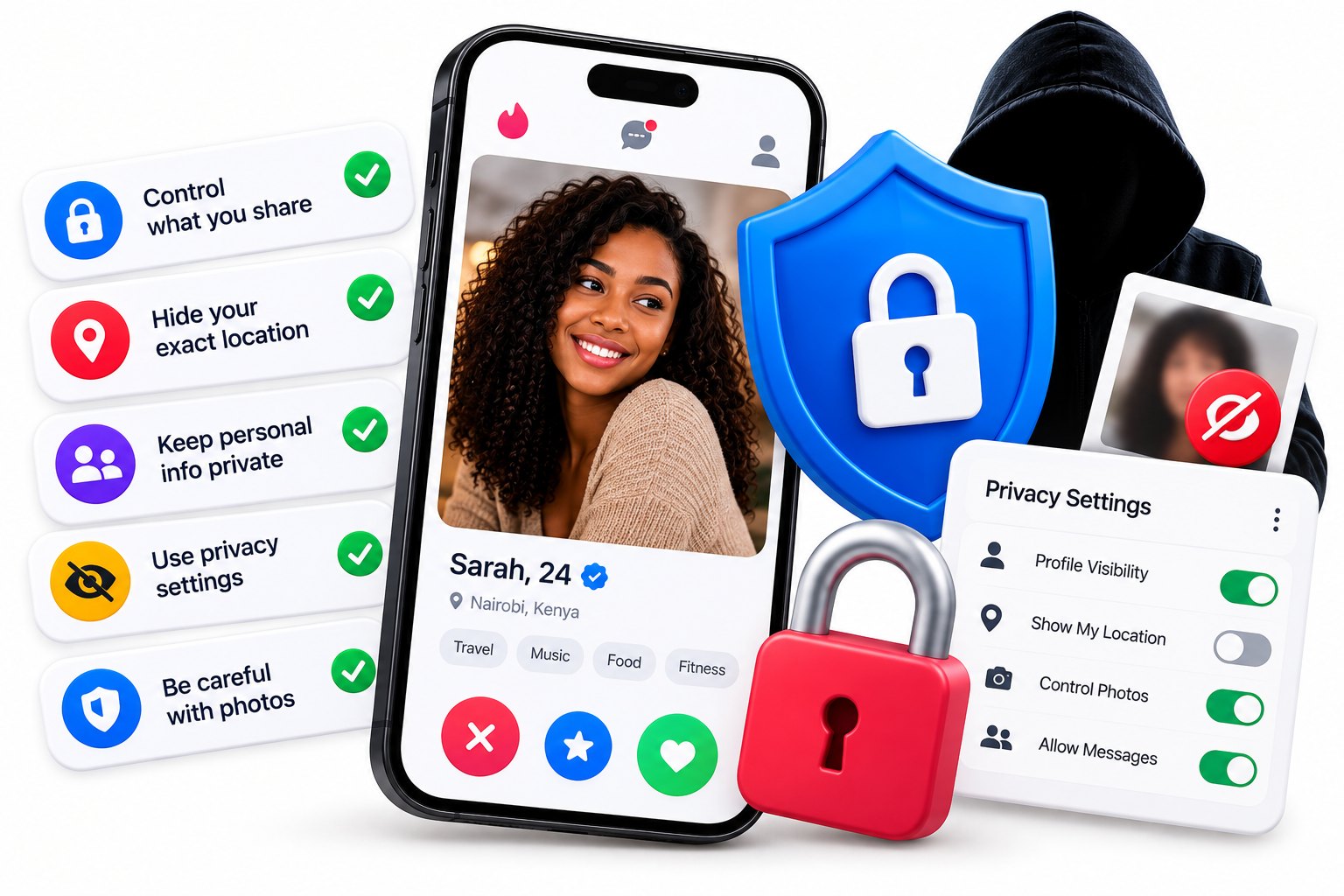
- Check your settings. Review who can see your profile and your last active time.
- Tell someone you trust. You do not have to carry this by yourself.
On ConnectHub, you can block and report from any profile or conversation. Reports are reviewed so that accounts that break the rules can be dealt with. Our safety tips page also explains how we expect everyone to behave.
What to say, and what not to say
You are not required to explain yourself before you block. Still, if you want to end a conversation politely, one short message is enough, and then you stop. Here are a few lines you can copy.
- "Thank you for chatting, but I do not feel a connection. I wish you well."
- "Please do not message me again. I will block this account if you do."
- "I am not comfortable with what you are asking, so I am ending this chat."
If the person is rude, threatening or pressuring you for money or photos, skip the message altogether and go straight to block and report. Long explanations invite arguments, and arguments give the other person something to hold on to. Remember that a boundary does not need a reason to be valid.
Keep evidence safely
Evidence matters if you later need to report to your bank or to the authorities. It is easy to lose once you block someone, so save it first.
- Screenshots of messages that show the date and time.
- The profile name, username, photos and any phone numbers.
- M-Pesa, bank or airtime receipts if any money was requested or sent.
- Links or account names on other platforms.
- A short note of what happened, written the same day while you remember the details.
Store copies somewhere safe, such as a folder on your phone or an email to yourself, not only inside the app. Do not edit screenshots, and do not delete the original messages. If you are worried about your own privacy while doing this, our guide to protecting your privacy on dating apps may help.
Handling harassment and unwanted contact
Harassment can take many forms. It might be constant messages, insults, threats, spreading rumours or turning up on other platforms after you blocked someone. It can be hard to know how to react, so here is a steady approach.
First, do not respond. Sometimes people continue because they get a reaction. Second, block every account or number they use, and report each one. Third, tighten your privacy: make social media accounts private, remove personal details and change any passwords you shared. Fourth, tell a friend or family member so someone else knows what is happening.
If the behaviour continues or becomes frightening, you can report it to the Directorate of Criminal Investigations (DCI) with your screenshots. You do not need to wait until you are sure it is a crime. The officers can tell you what steps are possible.
If someone is blackmailing or threatening you
Some people threaten to share private photos or information unless you pay or send more. This is frightening, but it is not your fault, and paying rarely makes it stop. Stop replying, keep the messages, block the account and report it. Contact your mobile money provider if you have sent money, and report to the DCI.
If you feel that you or someone else is in immediate danger, call 999 or 112 straight away. You can say clearly: "I am being threatened by someone I met online." Try also to tell a trusted person so you are not alone with it. For other signs of a scam, read our guide to romance scams in Kenya.
Where to get help in Kenya
You do not have to handle serious situations alone. Here are key contacts to keep handy.
- 999 or 112: emergency numbers if you or someone else is in immediate danger.
- 1195: the national gender-based violence helpline, for anyone experiencing or worried about violence or abuse.
- 116: Childline Kenya, only if a child or a minor is involved. If you believe someone you are talking to is a minor, stop the conversation and report the profile.
- The DCI: for reporting fraud, blackmail, threats and persistent harassment.
- Your bank or mobile money provider: if you have sent money.
These services exist to help. You do not need perfect evidence or a perfect story before you reach out.
Looking after yourself afterwards
Dealing with an unpleasant experience can leave you feeling tired, embarrassed or on edge. All of that is normal. Take a break from messaging if you need one, talk to a friend or a counsellor, and remind yourself that you did the right thing by stepping away.
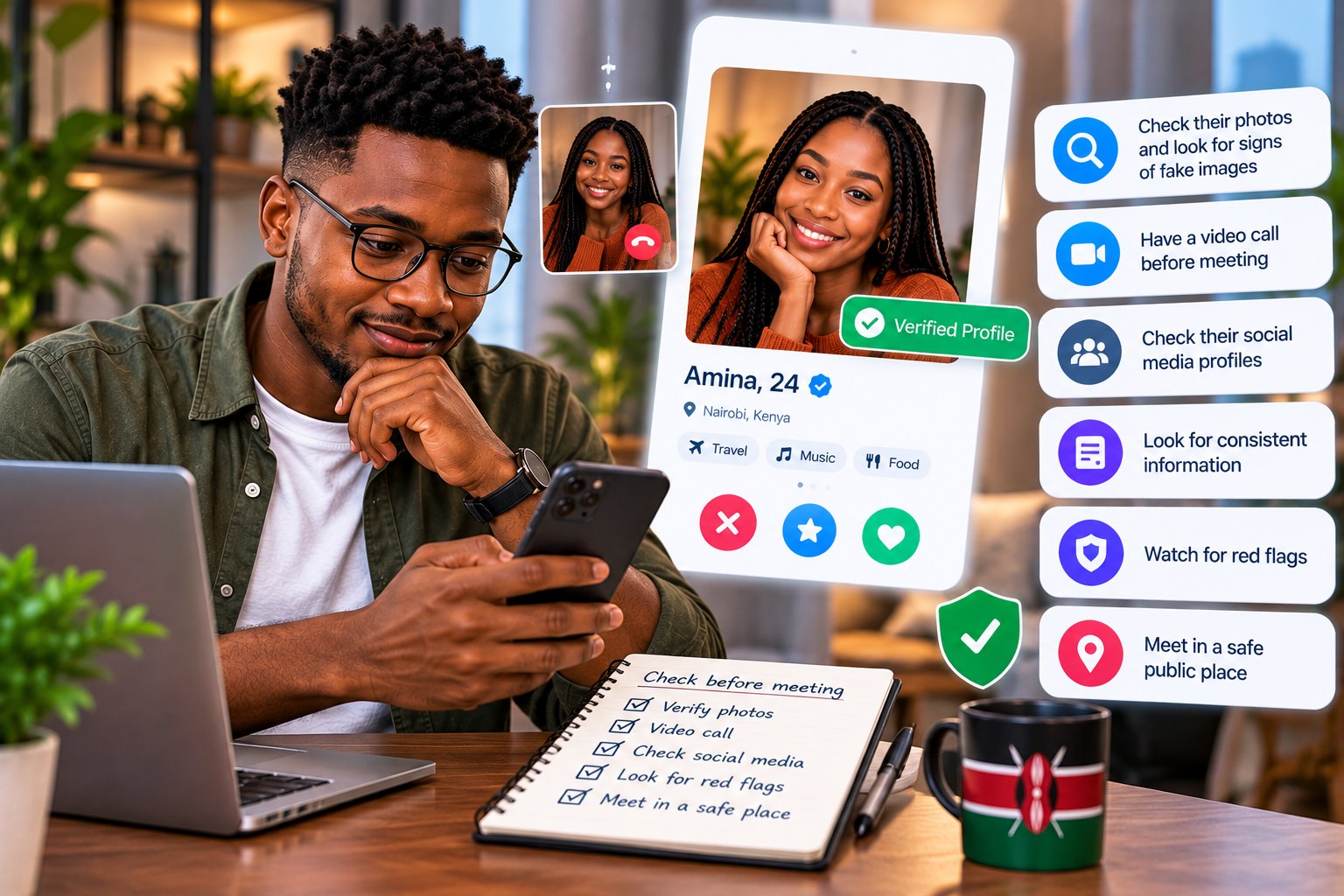
When you feel ready, you can return to meeting people with a few extra habits: ask for a video call early, keep personal details private for now, and follow the steps in our guide to meeting someone safely. You can also browse verified profiles near you or create a free profile whenever you like. Most people you meet will be kind, and you now know exactly what to do on the rare occasion that they are not.