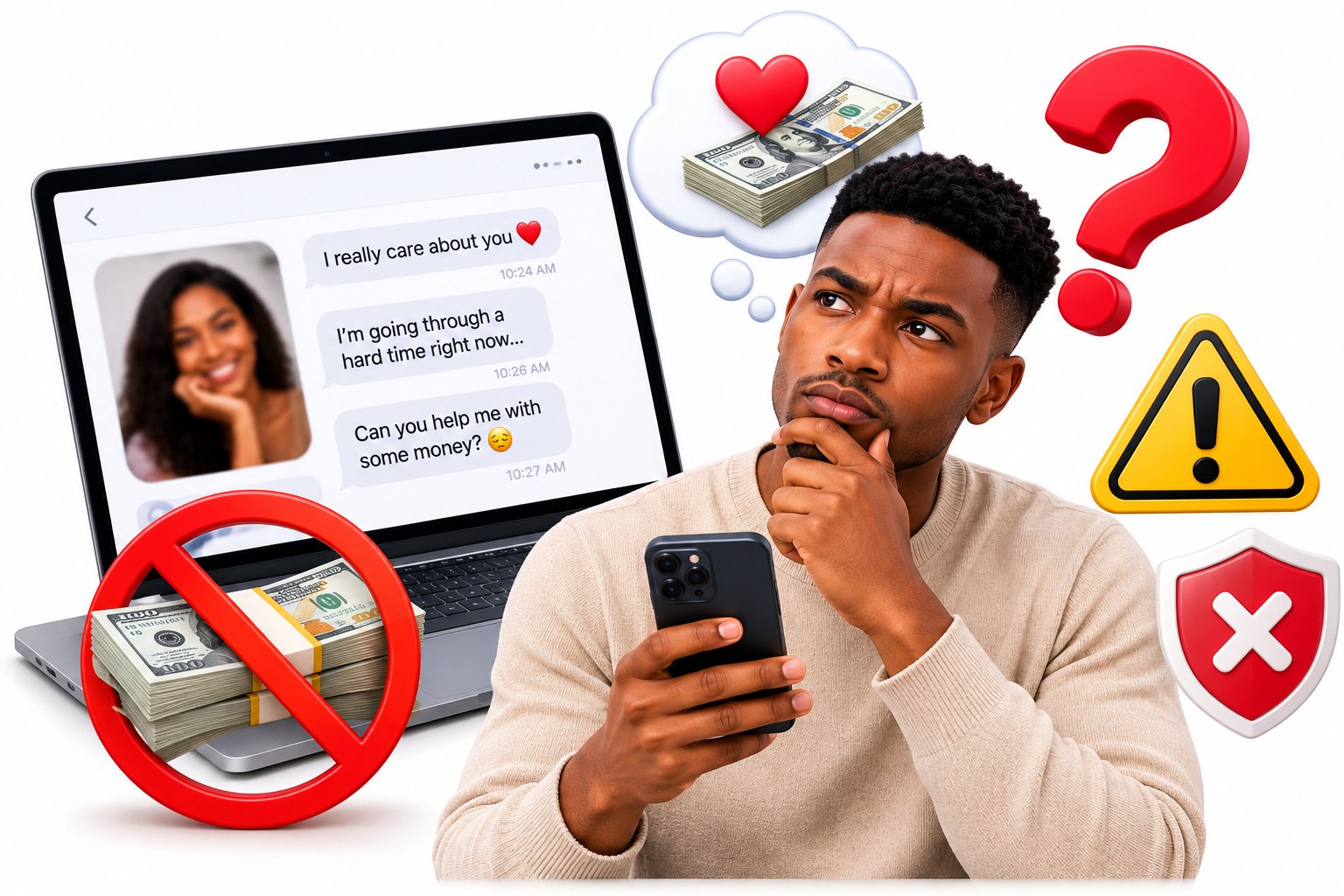


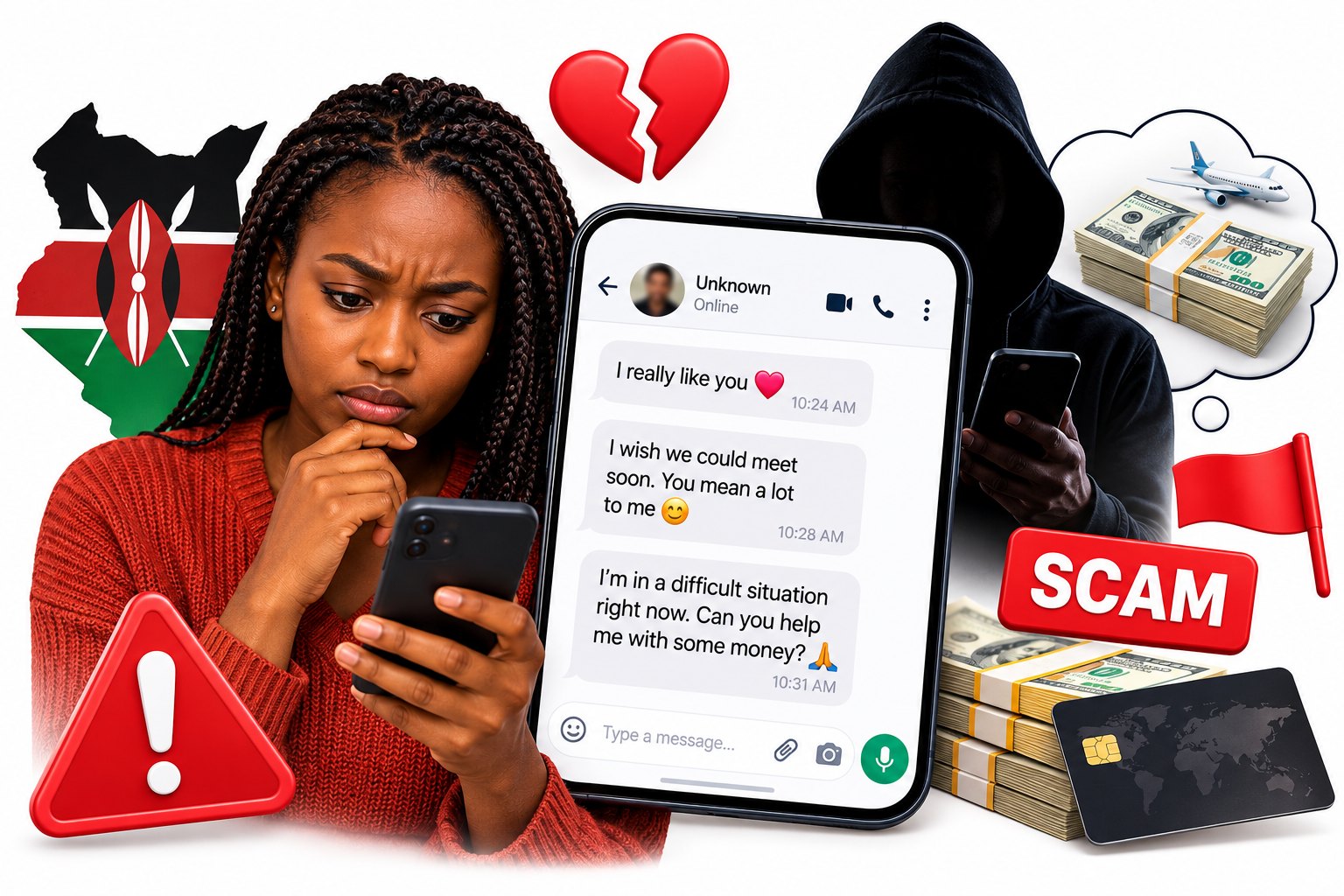
Nobody sets out to be tricked. Romance scams in Kenya, like everywhere else, work because they mix real human feelings with a carefully built story. They can happen to anyone who is kind, hopeful or simply busy and trusting. The most useful thing you can do is learn the pattern, because most of these scams follow the same steps.
This guide explains the warning signs, the most common stories, and exactly what to do if you think you are being scammed or already have been. If this has happened to you, please remember that it is not your fault. The person who lied is the one who did wrong.
How a romance scam usually works
The pattern is nearly always the same. First, a profile appears that looks attractive and trustworthy. Contact starts warmly, with lots of attention and compliments. Over days or weeks, the scammer builds a close bond and wins your trust. Then a problem appears, and with it a request for help, usually money. If you help once, there is often a second request, and a third.
The scammer is patient because patience works. They may chat with you every morning and evening, remember details about your family and say all the right things. The warmth feels real, which is exactly why it is so effective.
Warning signs of romance scams in Kenya
No single sign proves anything, but these are the ones to take seriously, especially in combination.
- Love bombing. They say "I love you" or "you are my destiny" within days and shower you with affection before you have properly met.
- No video call, ever. They always have a reason, such as poor network, a broken camera or strict rules at work.
- A dramatic job overseas. Common claims include an engineer on an oil rig, a doctor with an international organisation, a soldier on a mission or a businessperson stuck abroad.
- Urgent emergencies. A sudden hospital bill, a stolen wallet, an arrest, an accident or a family crisis, always needing money fast.
- Pressure and secrecy. They ask you to keep the relationship private from your friends or family, or they get angry when you ask questions.
- They cannot ever meet. Flights are cancelled, visas delayed, and plans fall through at the last minute.
What scammers ask for
Money is rarely requested in the first message. It usually arrives after trust has been built, and it often starts small.
- M-Pesa or mobile money. A small amount for "fare", "airtime" or "data bundles", then larger amounts.
- Airtime or vouchers. Easy to ask for and hard to trace.
- Bank transfers. For a hospital, a lawyer, school fees or a business deal.
- Cryptocurrency. Often linked to an "investment", with promises that you will get much more back.
- Gift cards or online payments. Especially when they claim to be abroad.
The rule is simple. If someone you have not met in person asks for money in any form, the answer is no. Our guide on whether you should send money to someone you met online has polite ways to say it.
Parcel, customs and investment scams
Two stories come up again and again, so it helps to recognise them.
The parcel or customs fee scam. The person says they are sending you a gift, perhaps a phone, jewellery, cash or a care package from abroad. Then you receive a call or message from a "courier" or "customs officer" saying the parcel is held at the airport and you must pay a clearance fee, tax or storage charge by M-Pesa. There is no parcel. The fee is the whole point, and once you pay, a new fee usually appears.
The investment scam. After weeks of friendly chat, the person mentions an easy way to make money, such as crypto trading, forex or a special business opportunity. They show you screenshots of profits and encourage you to put in a little. It may even appear to work at first. When you try to withdraw or invest more, there is always a new charge or a delay. Real partners do not need you to send money to prove you love them.
Why these scams work on smart people
If you have ever thought "I would never fall for that", you are in good company. These scams do not work because people are foolish. They work because they feel personal. The scammer pays attention, mirrors your values and often chooses a moment when you feel lonely, stressed or hopeful. Anyone can be reached this way.
Understanding that helps you act sooner. If you notice yourself being rushed, flattered into silence or told to keep things secret, pause. Talk to a trusted friend. A good friend will see the pattern even when you cannot. For more signs of a made-up identity, read how to spot fake profiles and catfishing.
What to do if you have been scammed
If you realise you have been targeted, take these steps in order. Do them as calmly as you can.
- Stop contact. Do not argue, threaten or plead. Simply stop replying, and do not send anything more, even to "get your money back".
- Keep evidence. Save chat messages, profile screenshots, phone numbers, M-Pesa messages, receipts and any account details they gave you.
- Contact your bank or mobile money provider. Report what happened straight away. Quick reports give them the best chance to help.
- Report to the platform. Block the profile and report it so the account can be reviewed and others protected.
- Report to the Directorate of Criminal Investigations (DCI). Take your evidence with you or follow the reporting channels the DCI provides.
- Protect your accounts. If you shared passwords, PINs or ID details, change passwords and tell your provider.
If you are in immediate danger, or someone is threatening or blackmailing you, call 999 or 112. Be careful about people who contact you afterwards offering to recover your money for a fee. That is a common follow-up scam. Our article on how to block and report someone online has more on collecting evidence.
If someone you love may be a target
Sometimes you are the one who spots the warning signs in a friend, a parent or a cousin. Perhaps they are suddenly secretive about their phone, talking about a partner they have never met, or short of money for no clear reason. Be careful how you raise it. If you say "you are being foolish", they are likely to defend the other person and close the door on you.
Try something gentler: "I am happy you have found someone who makes you smile. Would you mind if we looked at the profile together, and asked for a quick video call?" Ask questions instead of delivering verdicts, offer to sit with them while they check, and make it clear that you are on their side whatever happens. People who feel judged tend to hide things, while people who feel supported tend to ask for help sooner.
How to protect yourself going forward
Good habits make you much harder to trick. Ask for a video call early. Be cautious when someone moves very fast. Keep conversations on the platform until you trust the person. Tell a friend about new connections. Never send money, airtime or private photos to someone you have not met and checked.
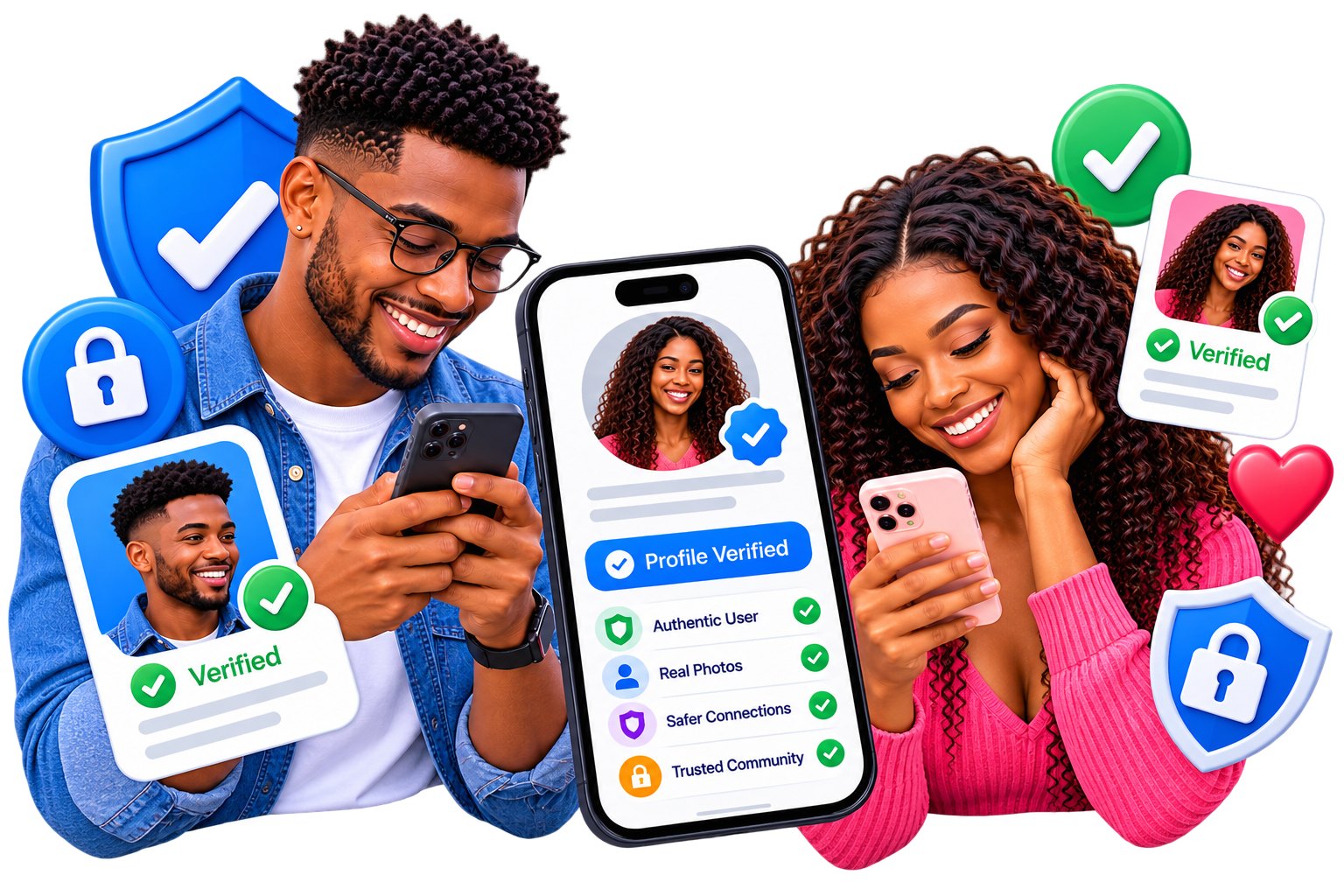
Verified badges on ConnectHub add one more layer, and you can read more on our safety tips page. When you are ready to meet someone, follow our checklist for meeting someone safely. You can browse real people near you or create a free profile any time.