

You have been chatting for a week, the conversation is lovely, and now they would like to meet. Before you say yes, it is worth taking a few minutes to verify someone is real before meeting them. This does not mean you are suspicious or unkind. It means you are making sure the person who turns up matches the person you have been talking to.
The checks below are simple, quick and polite. You can do most of them from your phone, and they work for dates, new friends and any other meeting with someone you know only online.
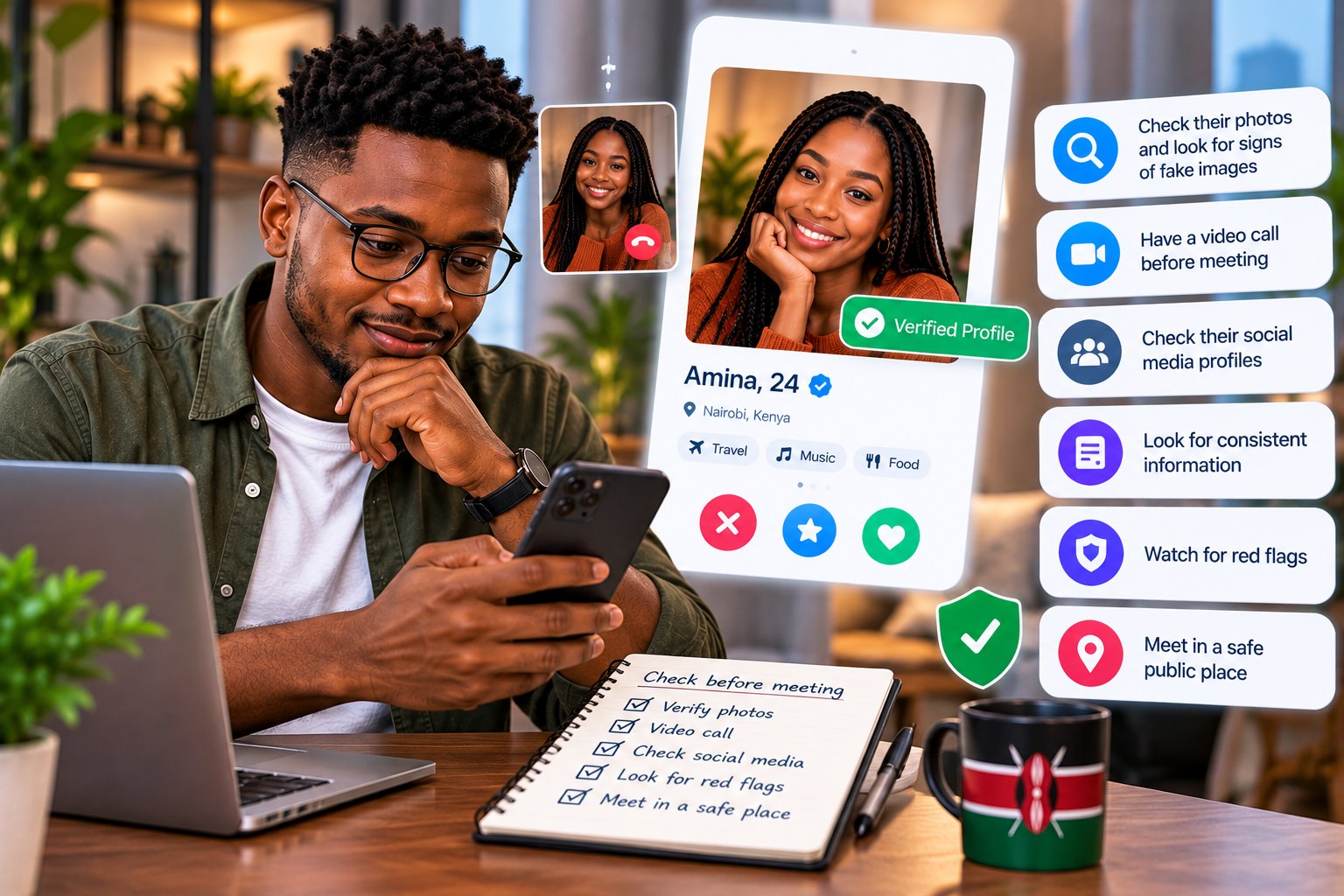
Start with a short video call
A video call is the most reliable check you can do, and it takes only a few minutes. It shows you that there is a real person behind the messages, that they look like their photos, and that their voice and manner fit the way they write. It also tells you whether you enjoy talking face to face, which is useful to know before you travel across Nairobi or Mombasa.
Make it easy and friendly. You could say: "I am enjoying our chats. Shall we do a ten minute video call on Thursday evening before we meet?" Real people usually agree, even if they feel a little shy. Notice how they behave on the call. Are they relaxed? Do they answer easily when you ask about their day? Do they match their photos?
Excuses and what they tell you
Almost everyone has had a bad network day, so one excuse is not alarming. What matters is the pattern. A person who has a different reason every time, such as a broken camera, no bundles, a poor signal or strict rules at work, may be hiding something.
You can respond kindly and firmly: "No problem, we can try again this weekend. I only meet people after a quick video call, it is just my safety rule." If they get angry, offer a voice call but never a video call, or push you to meet anyway, you have learned something important. Our guide on how to spot fake profiles and catfishing explains the other signs that go with this one.
Use a reverse image search
If you have doubts about someone's photos, a reverse image search can help. In general terms, you save or screenshot one of their pictures and upload it to the image search tool of a search engine. The tool then shows you where the same or similar images appear online.
- If the pictures appear under a different name, the profile is probably borrowed.
- If they come from a model, an influencer or a stock photo page, it is not a real personal profile.
- If nothing appears, that is neutral. It does not prove they are real, but it is not a warning.
Try two or three different photos, not only the first. Remember that this check can only catch stolen images. Someone could still use their own photos and lie about other things, which is why you should combine this with the other steps.
How to verify someone is real before meeting: consistency checks
Honest people tell a steady story. It helps to keep a few quick notes about what they have told you, such as their job, their town, their age and their family, and see whether the details stay the same over days and weeks.
Look for these signs of inconsistency:
- Their job or city changes between conversations.
- Their age or birthday does not match.
- They say they live in Nairobi but their messages arrive at odd hours and they cannot describe local places.
- Their language and spelling suddenly change from one chat to the next, as if a different person is typing.
- Stories about the past have gaps that never get filled in.
People do forget small details, so do not treat a single slip as a lie. Look at the overall picture.
Verified badges and social profiles
A verified badge on a profile means the person has completed an extra check on the platform. On ConnectHub, it is a helpful sign that the person is serious about being genuine, and it makes impersonation harder. It is not a promise of good character, so keep using the other steps. You can read more in our article on why profile verification matters.
You can also look at their social media, if they are happy to share it. A real account usually has some history: older posts, photos with friends, comments from people who know them, and tagged pictures over time. A brand new account with a handful of photos and very few friends deserves a question. Be fair about this, though. Some honest people keep their social media private, and you can always ask politely.
Ask simple questions that real people answer easily
Everyday questions work well because real people answer them without effort, and made-up identities find it harder to keep them up. You do not need to interrogate anyone. Weave them into normal conversation.
- "What is the traffic like on your road at the moment?"
- "Which is your favourite place for chai or coffee near you?"
- "What did you have for lunch today?"
- "Can you send a quick photo of your view right now?" A simple photo of the sky, a street or a cup of tea is easy to take.
- "Tell me about your friends. What do you all do on weekends?"
Pay attention to how the answers feel. Real replies are specific, a little messy and often include a bit of humour. Vague, copied or dramatic replies are worth noticing.
A quick pre-meeting checklist
Before you agree to meet, run through this short list. If you can tick most of it, you can go ahead with more confidence.
- You have had at least one video call and they matched their photos.
- Their story has stayed the same over several days.
- A reverse image search of two or three photos found nothing suspicious.
- They answered ordinary questions in a natural, specific way.
- They have not asked you for money, airtime or private details.
- They respect your boundaries, including when you say you want to meet in a public place.
If two or three of these are missing, do not feel pressure to meet. You can say, "I would like to wait a little longer before we meet." A person who is genuinely interested will understand. If they are not willing to wait, that is a useful answer in itself, and you have lost nothing but a few messages.
Be ready to be checked, too
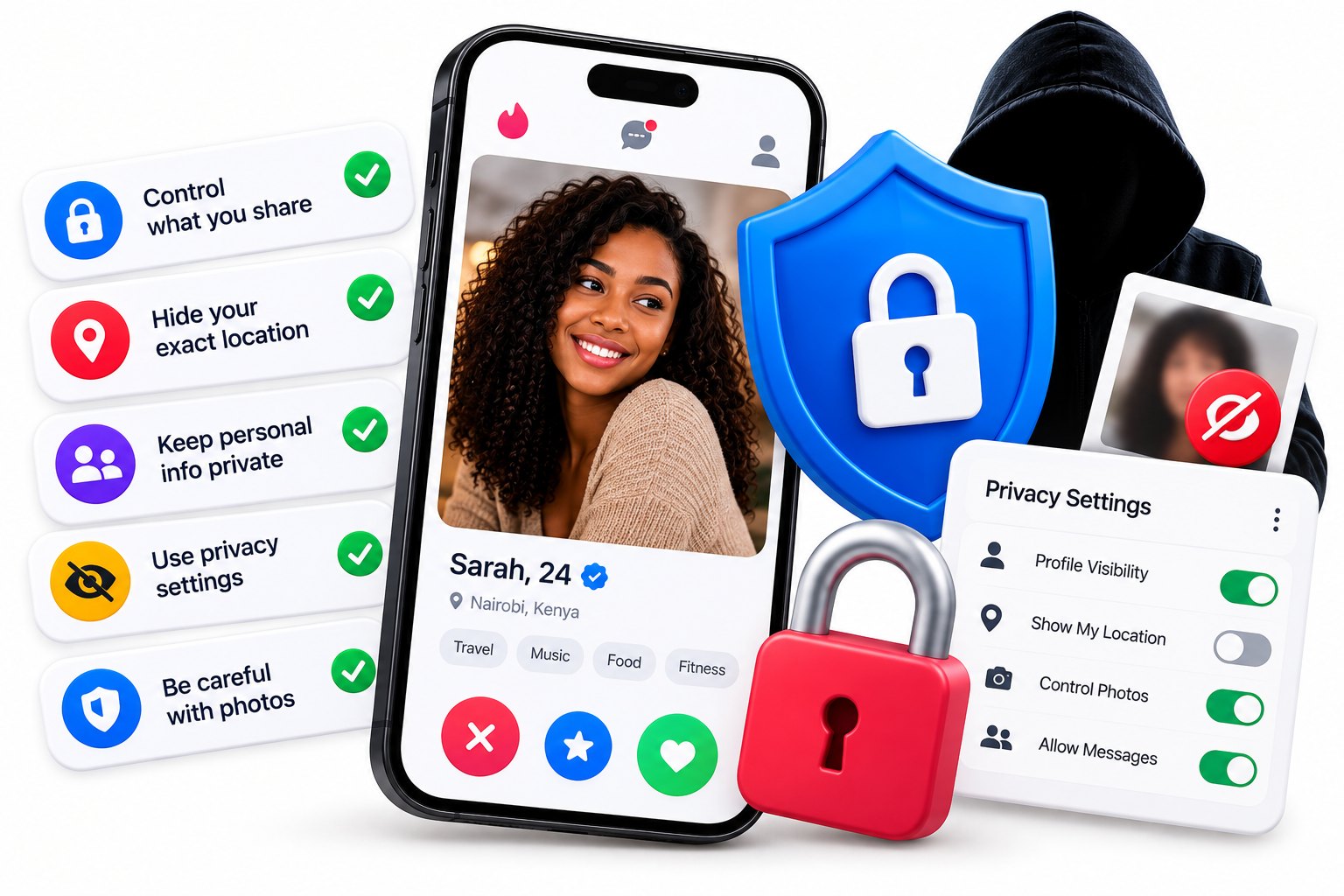
Verification goes both ways. A thoughtful person will probably check you as well, so be open to a video call and happy to answer simple questions. You can still protect your privacy while doing so. Our guide to protecting your privacy on dating apps shows you what to share and what to hold back.
Once you have checked, you can plan the meeting with confidence. Choose a busy public place, tell a friend where you are going and use your own transport. The full routine is in our checklist for meeting someone safely, and our safety tips page is a handy quick reference. If anything you find worries you, you can walk away, and you can block and report the profile.
When you are ready, browse verified profiles near you or create your free profile and start talking to real people.