

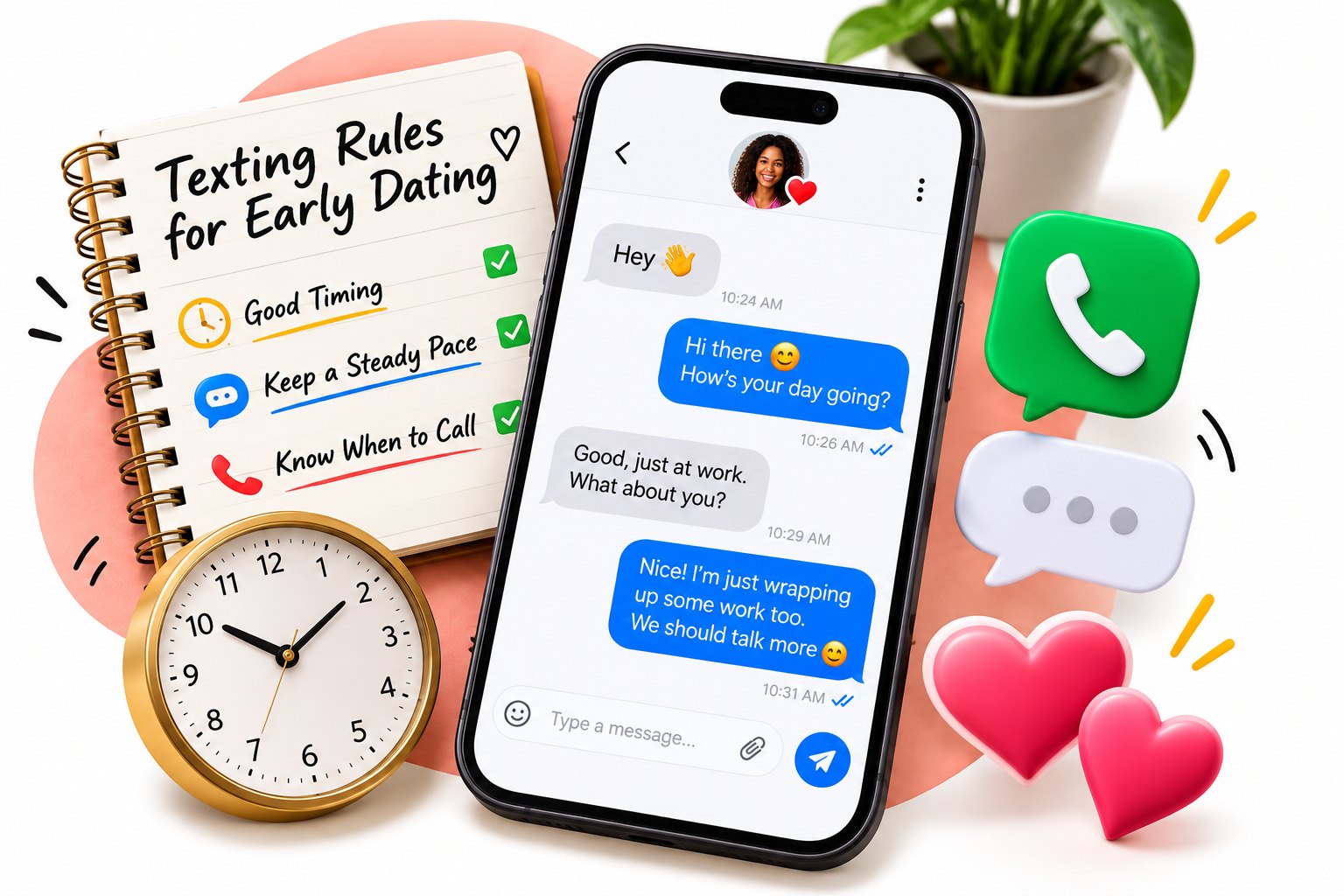
Early dating happens mostly on a phone screen, so a lot of anxiety starts there. How soon should you reply? How many messages are too many? What does a short answer mean? These texting rules for early dating are not strict laws. They are friendly guidelines that help you stay relaxed, avoid games, and read the situation fairly.
The aim is simple: communicate in a way that is honest, kind and comfortable for both of you, and then move towards meeting safely in real life.
Match the pace, do not play games
The first rule is the most useful. Aim to match the other person's rhythm, not to win a contest. If one person messages twenty times a day and the other once in the evening, someone will feel overwhelmed and someone will feel ignored. Neither is a bad person, they just have different habits.
Notice what feels comfortable and say so gently. For example, "I am not on my phone much during work, but I love catching up in the evening." That one sentence removes a lot of guesswork. Avoid deliberately waiting hours to appear busy. Games waste time and make honest people anxious.
How often to message
There is no correct number of messages per day. In the first week, a few good conversations are better than a constant stream of small ones. Quality beats quantity. A thoughtful message in the morning and a longer chat in the evening can feel more connected than twenty "hi" and "what are you doing" messages.
- Send messages when you have something to say, not just to fill silence.
- Avoid sending several messages in a row before they reply.
- Let conversations end naturally. It is fine to say goodnight and pick up tomorrow.
- Do not expect all day availability from someone you have just met.
If you need ideas to keep the chat interesting, see our guide to starting and keeping a conversation online.
Good manners that never go out of style
A few simple courtesies make every chat more pleasant. Say please and thank you. Do not send messages at very late or very early hours unless you both chat then. Avoid voice notes that run for minutes unless the other person likes them. Respect it when someone says they are not comfortable sharing something. And if you are going to cancel a plan, say so early and kindly, rather than disappearing.
Reply timing without the stress
People reply at different speeds. Some answer in seconds, some at lunch, some at night. Many Kenyans work long hours, spend time in transport, or share one phone with limited data, so slow replies do not always mean low interest. Look at the overall effort over several days, not a single gap.
A good habit is to reply when you can give a real answer. If you are busy, send a short note: "In meetings all day, will reply properly tonight." It takes ten seconds and prevents misunderstandings. If you notice the other person takes a long time, avoid sending angry or guilt-heavy messages such as "Why are you ignoring me?". They push people away. Instead, wait and see whether they return with warmth.
Texting rules for early dating when you feel mixed signals
Mixed signals are one of the most common frustrations. One day they send long, warm messages, and the next day they give short, cold ones. It could be stress, shyness, a busy job or simple uncertainty. It could also be that they are not that interested.
- Give it a week or two and watch the pattern.
- Do not rush to fill gaps with your own worry.
- Ask kindly and directly: "I like talking with you. Is there something you would like us to do, like a call or a coffee?"
- Judge them on what they do, not on one nice sentence.
- If things stay unclear, step back and focus on people who are consistent.
It can help to read about signs someone likes you online to compare what you are seeing with healthy interest. Remember that you are allowed to want clear communication.
What to keep for later
Text is a lovely way to get to know someone, but it is not the place for everything. Heavy topics such as past hurts, money problems, or serious arguments are better discussed in a call or in person, where tone is clear. The same goes for big declarations of feeling. Starting slowly protects both of you.
Tone is also easy to misread in writing. A short reply may be a rushed one, and a joke can land as a criticism. Before you assume the worst, read the message again, picture the person typing it between two meetings, and ask a friendly question if you are unsure. "Did I read that right?" is a perfectly good thing to type. Clear, kind words, a sensible emoji now and then, and a little patience prevent most arguments before they begin.
If a misunderstanding does happen, fix it quickly and simply. Say sorry if you were careless, explain what you meant, and move on. Do not let a small confusion grow into a silent standoff of several days. Most early dating friction is nothing more than two busy people reading each other's messages too fast.
Also avoid sending anything you would not want shared. Keep private photos and sensitive personal details to yourself until you really trust a person, and even then be careful. Our guide on how to protect your privacy on dating apps explains the habits that keep you safe.
Moving from texting to a call
After several days or a week of good conversation, a short call is the natural next step. Hearing someone's voice shows warmth and humour that text cannot, and it helps you confirm that the person is who they say they are. A quick video call is even better for that.
Make the request easy. You might say, "I am enjoying our chats. Would you like to do a ten minute call on Thursday evening?" Choose a time that suits them and keep the first call short. If they keep avoiding a call or refuse a video call every time, be careful, because that can be a sign that the profile is not genuine. Our article on how to spot fake profiles and catfishing has more detail.
When texting becomes a warning sign
Some behaviour is not a texting style, it is a red flag. If someone sends constant messages and gets angry when you do not reply, demands your location, insists on secrecy, or asks for money, airtime or M-Pesa, take a step back. A person who respects you respects your time and your boundaries.
- Pressure to reply immediately, every time.
- Guilt or anger when you are busy.
- Requests for private photos, money or personal documents.
- Strong declarations of love before you have met.
If you feel unsafe, you can stop replying, block the person, and report them. Read about how to block and report someone online and trust your instincts.
From chat to a safe first meeting
The purpose of early texting is to find out whether you want to meet. When you both feel comfortable, suggest a simple public plan, such as coffee in the daytime. Tell a friend, arrange your own transport and keep your personal details private until you know the person better. Our safety tips page has a checklist you can follow.
If you are still looking for someone to chat with, you can browse people near you and start a conversation at your own pace. Relaxed, honest and consistent beats clever every time.