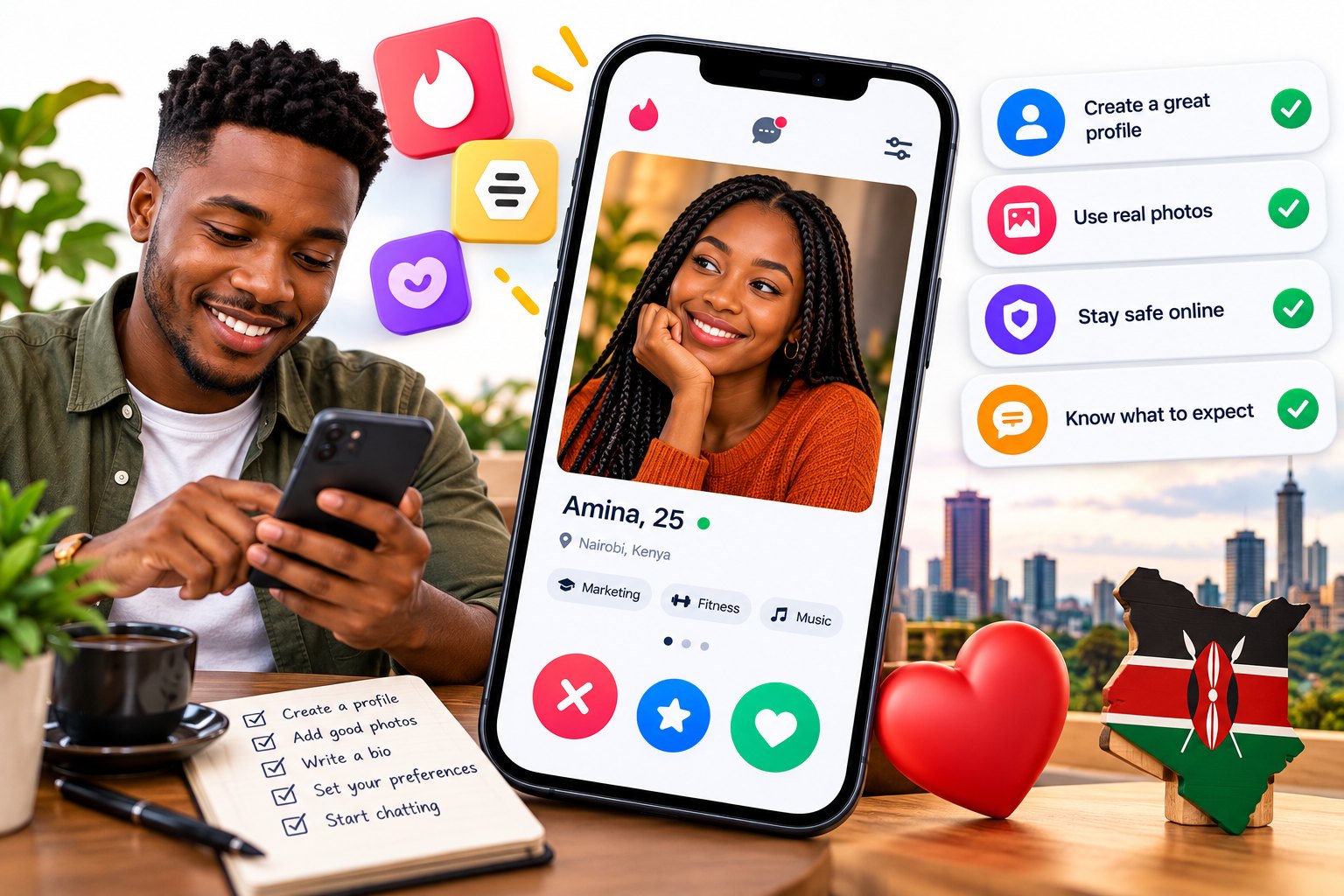


Good manners cost nothing, and they make a big difference when you are getting to know someone. If you want to understand dating etiquette in Kenya, the short version is this: be respectful, be honest, be on time and read the situation. Kenya is a diverse country with city habits, rural habits, many languages and many beliefs, so there is no single rulebook. There are, however, some common expectations that help dates go well.
This guide covers punctuality, money, family, language, faith, public and private behaviour and a few everyday courtesies. Treat it as friendly guidance, not a strict script. The goal is to make the other person feel comfortable and respected.
Respect is the foundation of dating etiquette in Kenya
Whatever else you do, treat the person in front of you with respect. Listen when they speak, do not interrupt, and keep your phone away. Look at them when you talk, and be warm to the waiter, the boda boda rider and the security guard as well. People notice how you treat others, and it tells them a lot about your character.
Respect also means accepting a no. If someone says they are not interested, or that they want to move slowly, take it kindly. Do not pressure, guilt-trip or keep messaging. Our guide on how to handle rejection gracefully is useful if you are on either side of that moment.
Punctuality and communication
Time is a sign of respect. Many people in Nairobi and other big towns plan dates around traffic and matatu schedules, so leave earlier than you think you need to. Aim to arrive on time or a few minutes early. If you are running late, send a message right away with an honest estimate, and say sorry when you arrive.
The same goes for messages. You do not need to reply within seconds, but disappearing for days without a word feels unkind. If you are busy, say so. If you are no longer interested, say so politely instead of going silent. For pacing, read our tips on texting rules in early dating.
Who pays, and how to talk about it
This is one of the most talked-about questions. In general terms, many Kenyans still expect the person who invites to pay on a first date, and traditionally that has often been the man. At the same time, more and more people prefer to split the bill, especially early on, and many women are happy to pay or share. Neither approach is wrong.
What matters is how you handle it:
- If you invited, offer to pay, and do it without making a show of it.
- If the other person offers, say thank you, and offer to get the next one.
- If you want to split, say it lightly: "Shall we share this one?"
- Choose a place that suits both budgets, and do not choose somewhere you cannot afford to impress someone.
- Never treat a meal as a debt that must be repaid with attention or affection.
Be careful with money in other ways too. Do not ask someone you have only just met for M-Pesa, airtime or loans, and do not send money to a person you have not met in person. Read should you send money to someone you met online for more.
Family and community expectations
In Kenya, relationships are rarely just between two people. Parents, siblings, aunties, church friends and elders can all have opinions, and in many families marriage is a community matter. Some people keep their dating life private until things are serious, while others are open from the start. Both are understandable.
Be sensitive to this. Do not post a new partner on social media or turn up at their home before they are ready. Ask questions like "Is your family aware you are dating?" and respect the answer. When things do become serious, introducing someone is a big step and deserves care and a little planning. See introducing your partner to family in Kenya for help with that conversation.
Language: English, Swahili and Sheng
Most Kenyans move easily between English, Swahili, Sheng and their mother tongue, sometimes within a single sentence. Use the mix that feels natural, and follow the other person's lead. If they write in formal English, match them at first. If they drop into Swahili or Sheng, you can relax a little.
A few simple courtesies help. Do not laugh at someone's accent or mistakes. Do not switch to a language to exclude a third person at the table. Be careful with Sheng slang that you do not fully understand, because it can sound rude, and avoid pet names with someone you barely know. Clear, kind language is always better than clever language.
Religion and background, without stereotypes
Faith is important to many Kenyans, and it shapes habits such as what people eat, when they pray and how they spend weekends. Some people want a partner of the same faith, while others are open. Likewise, your background or home community may matter to your family, even if it does not matter to you.
The respectful approach is to ask, not to assume. Never decide what someone believes, eats or values because of their religion, tribe or region. People are individuals. Ask open questions such as "What does Sunday look like for you?" and share your own honestly. If your values differ on something important, like faith, children or where you want to live, talk about it kindly and early so nobody is hurt later.
Public and private behaviour
Public displays of affection are viewed differently across communities and places, so use common sense on early dates. A warm greeting and polite manners are always fine. Anything more should depend on both people being comfortable and on the setting. If you are unsure, hold back and follow their lead.
Privacy matters too. Do not share photos or private messages without permission, and do not discuss someone's personal life with others. Meeting in a public place for the first few dates is polite and sensible, and it is a good safety habit as well. Our checklist for meeting someone safely and our safety tips cover the basics. Consent and comfort always come first, and anyone who ignores them is showing a red flag, so read green flags and red flags in early dating when you are unsure.
Ending things with kindness
Not every date leads to a second one, and that is normal. Good etiquette matters most at the end. If you are not interested, tell the person kindly and clearly instead of disappearing. A short message such as "Thank you for meeting me, I enjoyed meeting you, but I do not feel a romantic connection" is respectful and saves them from waiting and wondering.
If you are the one being turned down, say thank you and wish them well. Do not argue, bargain or send angry messages, and do not share their private details with friends or online. People remember how you handled a disappointment far longer than they remember the disappointment itself, and kindness at the end keeps your reputation, and your own peace of mind, in good shape.
Everyday courtesies that people remember
Small actions leave a big impression. Dress neatly for the occasion, and ask what plan suits them rather than deciding everything. Greet properly, thank them for their time, and send a short message afterward, such as "I had a nice time today, thank you." Be honest about your intentions, and do not pretend to be single, wealthy or ready for marriage if you are not.
Online, the same manners apply. Write a clear profile, reply kindly, and do not send rude or unwanted messages. You can browse people near you, and if you are brand new, our guide to online dating in Kenya covers the whole journey from profile to first date. When you are ready, create your profile and bring your best manners with you. A little respect, honesty and punctuality go a very long way.