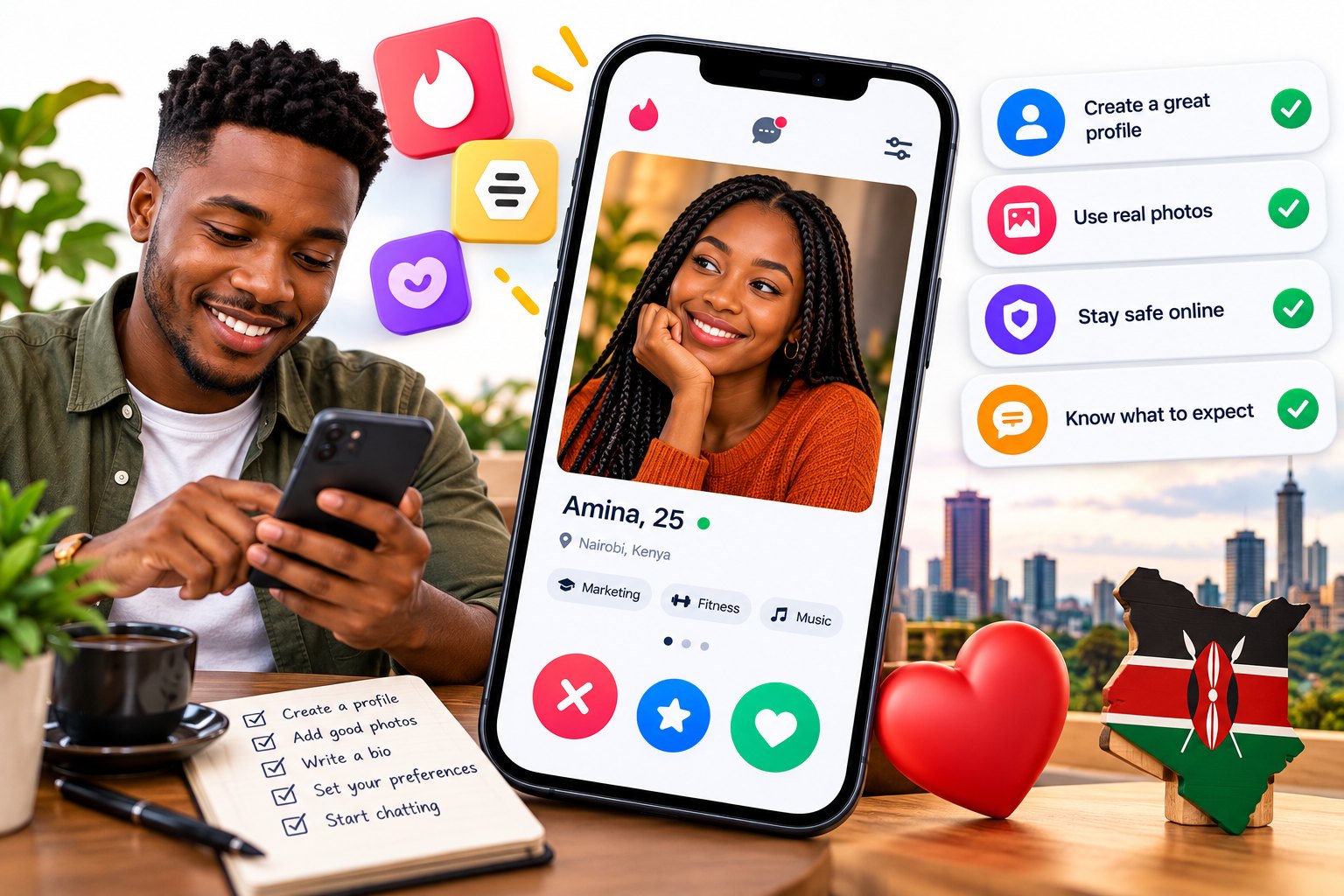


The internet has made the world smaller. You can now chat with someone in London, Toronto, Dubai or Johannesburg from a matatu on the way home. Many Kenyans enjoy this, whether they want a pen pal, a friend with a different view of the world or something more. But meeting people abroad safely takes extra care, because distance makes it harder to check who someone really is. This guide explains how to enjoy those connections and protect yourself.
It is written for anyone using an international feature, and the advice is simple: go slowly, ask for proof, keep your money in your pocket and trust your instincts.
Why people connect across borders
There are many good reasons to talk to people in other countries. You may want to learn about another culture, practise a language, make a friend with shared interests or meet a partner who sees life differently. Some Kenyans abroad also want to reconnect with home. These are all normal and healthy reasons.
ConnectHub has an international section for this purpose. It lets you find people in other countries who are also looking to connect. As with any online meeting, the platform can give you tools, but your own habits protect you most.
The basic rules of meeting people abroad safely
Before you start, remember five rules. They are simple, and they will prevent most problems:
- Never send money, airtime or gifts to someone you have not met in person.
- Never pay for a visa, a flight, a fee or a document for someone you have not met.
- Keep your ID, bank, M-Pesa and address details private.
- Insist on live video calls before building trust.
- Slow down if anyone rushes you, and report anything suspicious.
If you remember nothing else, remember these. They apply whether the person says they live in Europe, America, Asia or a neighbouring African country.
Time zones and the rhythm of a long-distance chat
When someone lives in a different country, the clock becomes part of your relationship. When it is noon in Nairobi, it may be early morning in New York or late evening in Sydney. Check their local time before messaging or calling, and agree on a regular time that works for you both.
Be patient with gaps in replies. A person who does not answer at once may be asleep or at work, and it does not mean they are losing interest. At the same time, watch for patterns that do not make sense. Someone who says they are in one country but is only awake at times that match another may not be telling the truth. Consistency is a good sign, and a story that keeps changing is not.
Video calls: the best test you have
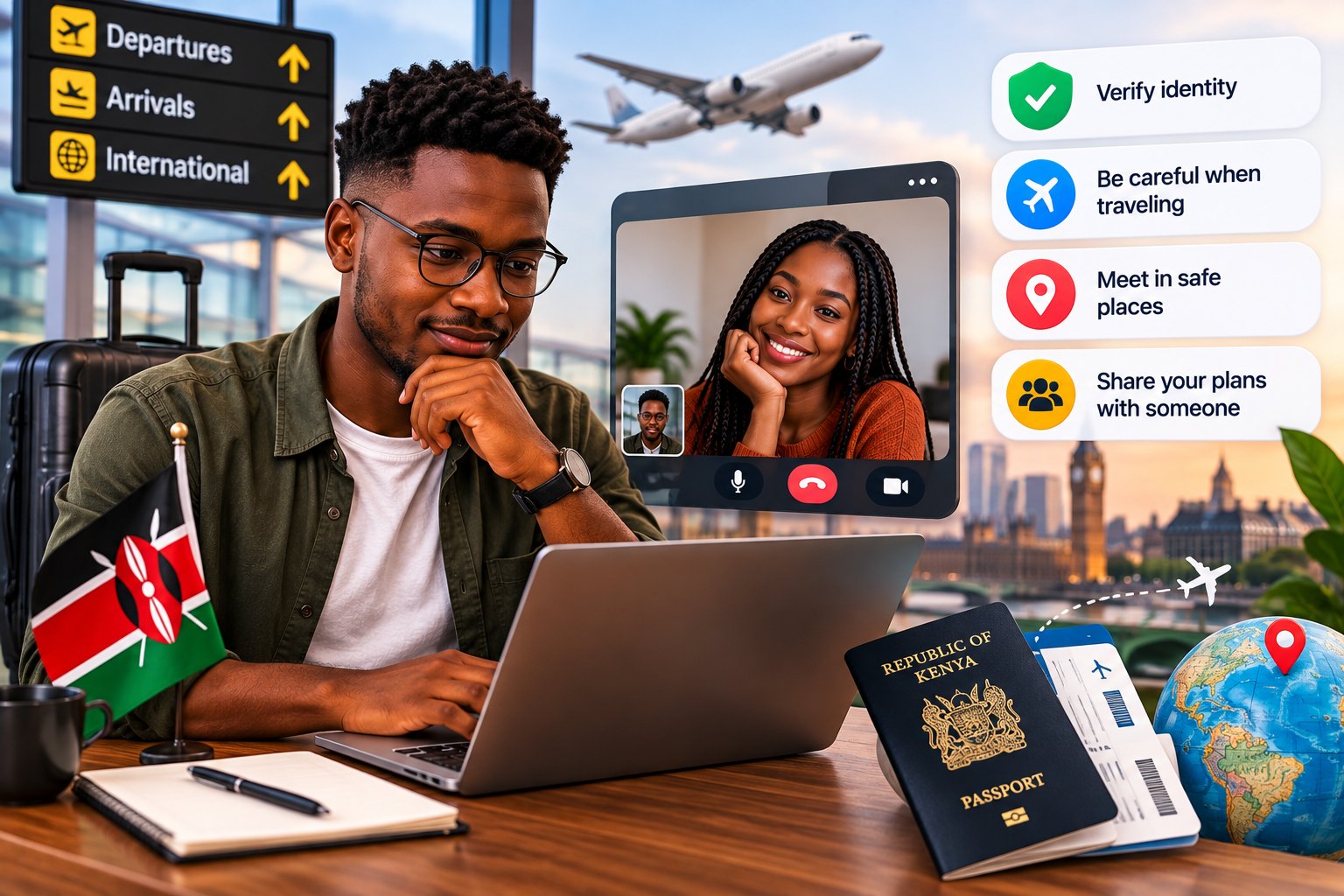
A live video call is the single most useful safety tool. It shows you a real person, in real time, who matches the photos. Ask for one early, before you share much about yourself. It does not need to be long or fancy. A ten-minute call is enough to see a face, hear a voice and notice how the person behaves.
Be cautious if they:
- Always say the camera is broken or the network is poor.
- Offer only voice notes or pre-recorded clips.
- Look very different from their photos, or the video freezes in a suspicious way.
- Get angry or defensive when you ask for a call.
Our guides to how to verify someone is real before meeting and spotting fake profiles and catfishing explain more checks.
Visas, tickets and immigration claims
This is where many people lose money. A scammer may say, "I will bring you to my country, but I need you to pay for the visa processing first," or "Send me money for your ticket and I will refund you." Others say they have a contact in an embassy or at an airport who can speed things up for a fee. All of these should make you stop at once.
Here is the truth in plain terms. Visa and immigration decisions are made by the official authorities of each country, not by a private person you met online. A genuine friend or partner will never ask you to pay for their travel, their documents or their fees. If you want to travel anywhere, find out the real process through official government and embassy channels yourself, and do not rely on a stranger's promises. If anything about the process is unclear, seek advice from a qualified and licensed professional.
The same applies the other way round. Be careful if someone asks you to receive money, parcels or documents on their behalf, or to move money through your account. That can pull you into trouble you did not create.
Common scams and warning signs
Scams that target people looking for connections abroad often follow a pattern. Learn it, and you will spot it early.
- The person quickly says they love you, calls you their soulmate or wants exclusivity within days.
- They claim a job that keeps them away, such as an oil rig, the military or an overseas contract, so they cannot video call.
- They face a sudden emergency, a hospital bill, a customs fee, a frozen account or a stolen wallet, and ask for money.
- They want to move the chat to a private app right away.
- They send a gift or a parcel and then ask you to pay a clearing fee.
- Their story has gaps, their photos look too perfect or their English does not match where they claim to be from.
Our detailed guide to romance scams in Kenya and their warning signs covers these in depth, and should you send money to someone you met online explains why the answer is always no. If someone makes you uncomfortable, learn how to block and report someone online.
Cultural differences and expectations
Even with a genuine person, cultures differ. Directness, humour, family involvement, ideas about money, religion and the pace of a relationship vary widely from country to country. What feels polite in Kenya may feel cold somewhere else, and the reverse is true too.
Be curious and avoid stereotypes. Ask questions about daily life, and share your own without assuming the other person will understand everything. Talk early about what you each want, whether friendship, dating or marriage, and whether either of you wants to move countries. Do not assume that a polite compliment means a promise. Clear and kind communication prevents many misunderstandings.
Protecting your privacy while you talk
Even with a person who seems genuine, share details slowly. Early on, there is no need to give your full name, home address, workplace, ID number, or banking and M-Pesa information. Be careful with photos too, especially anything private, because pictures can be saved, copied and misused. If someone pressures you for photos or details, that is a reason to step back.
Keep your conversations on the platform for as long as you can, because it gives you tools to block and report. Use strong passwords and be wary of links or files that someone sends you. Our guide to protecting your privacy on dating apps has simple steps you can follow today.
Keeping it healthy and moving to a meeting
If a connection grows over weeks or months, you may want to meet in person. Take it slowly and plan carefully. Choose a neutral public place, arrange your own travel and accommodation, tell family or a trusted friend your plans and share your itinerary. Do not rely on the other person for a place to stay at the start, and keep your documents and money in your own control.
Meanwhile, support the relationship in healthy ways, with regular calls, honest talk and realistic expectations. Our long distance relationship tips can help, and our safety tips are worth reading before any meeting. For the full picture, see online dating in Kenya.
When you are ready to explore, visit the international section, keep your guard up and enjoy meeting new people with confidence. The world is full of kind people, and a careful approach helps you find them.